 Store Location
 Track Order



Bathroom Toilet Options For Log Cabins

Every log cabin needs a bathroom and a toilet system. Instead of the old outhouses, many options are available today for toilets that meet a wide range of needs and budgets.
For log cabin bathrooms, popular toilet options include composting toilets, dry-flush toilets, incinerating toilets, and traditional flush toilets if a septic or sewer system is available. Composting and dry-flush models are ideal for off-grid or remote locations as they use minimal or no water. Incinerating toilets offer a high-tech alternative for remote locations, while traditional systems are the standard for properties with plumbing access.
Log Cabin Toilets: Off-Grid And Remote Options
 Not all log cabins have traditional plumbing and water systems. For those that don’t, there are viable options that work well, no matter where your cabin is located, including:
Composting toilets: These are a popular choice for cabins without traditional plumbing. They use minimal water and turn waste into compost, which can then be safely disposed of or used for gardening. How they work: Some models separate liquid and solid waste, while others are self-contained units. They require proper ventilation. Considerations: Models like the Air Head Composting Toilet are designed to be especially good for wet environments like cabins.
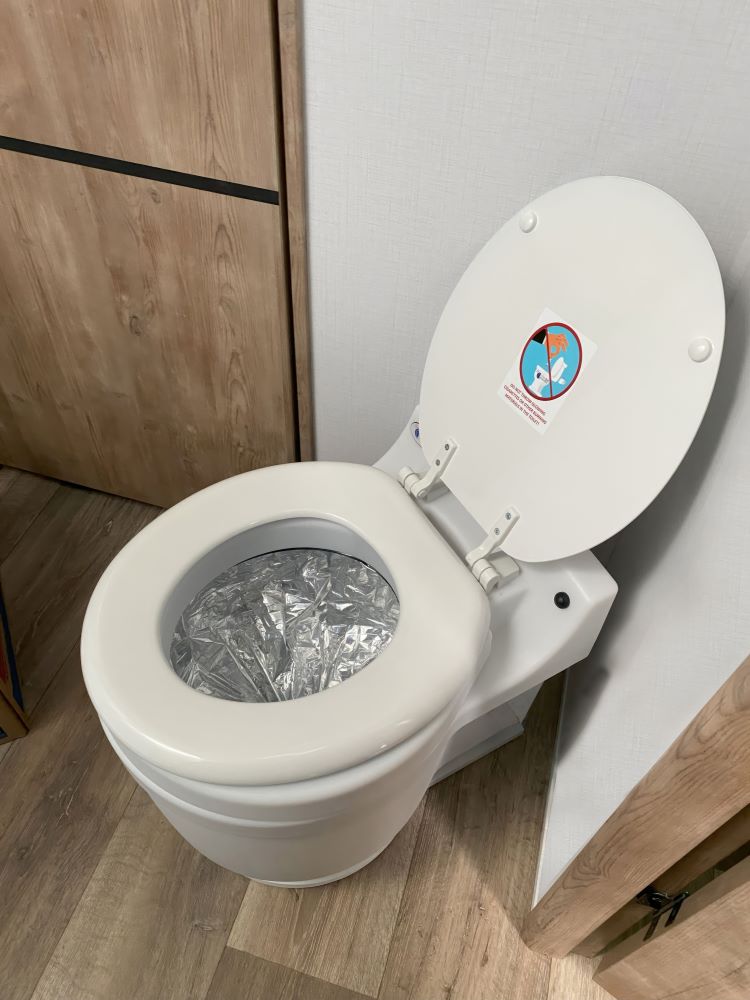
Dry-flush toilets: These are completely waterless and use a double-layered barrier bag to seal away waste after each flush with the push of a button (shown here). How they work: A simple push of a button seals the waste into a self-contained, odor-free bag. Considerations: They are simple to operate and require no plumbing, water hookups, or chemicals.
Incinerating toilets: These high-tech units use a small amount of propane gas to incinerate waste at high temperatures, leaving only a small amount of sterile ash. How they work: Waste is incinerated, and the resulting ash is collected for disposal. They are commonly used in remote locations where traditional plumbing is impractical.
Traditional Log Cabin Toilets
Traditional flush toilet: If your log cabin has access to a standard plumbing system and a septic or sewer line, a traditional flush toilet is the most conventional option. How they work: They use water to flush waste into a sewer or septic system. Considerations: This option requires a full plumbing installation and connection to a municipal sewer or an on-site septic system. More options are available to consider, such as:
- Low-Flow Toilets are water-saving toilets that use 1.6 gallons of water or less per flush, significantly less than older, traditional models, which can use up to 3.5 gallons
- Dual-Flush Toilets offer two different flushing options: a full-power flush for solid waste and a reduced-power flush for liquid waste. This dual-flush mechanism is designed to conserve water by allowing users to choose the appropriate flush for their needs, leading to lower water consumption and utility bills.
- Wall-Mounted Toilets can save space in a cramped bathroom, and you can select their height. They are easy to clean under and around them for convenience.
- Bidets are becoming more popular because they wash you and less toilet paper is used.
- Urinals offer the benefit of reducing cleaning efforts in the bathroom. If you have space, this is a viable option.
“For log cabin bathrooms, popular toilet options include composting toilets, dry-flush toilets, incinerating toilets, and traditional flush toilets if a septic or sewer system is available.”
How To Select A Cabin Toilet
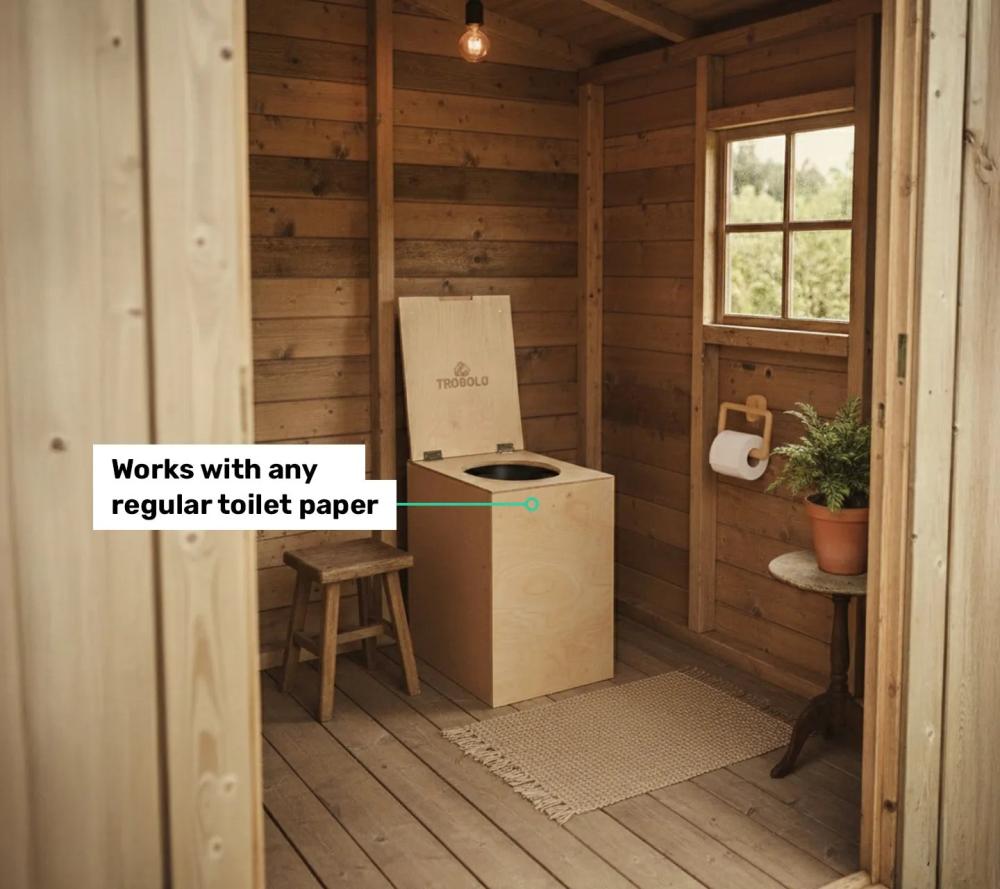 To choose the right toilet, first measure your space for the correct rough-in size and check for adequate clearance. Then, consider your needs for comfort and accessibility (e.g., bowl shape, height), cleaning ease, and water efficiency if water is used. Finally, select a style (one-piece vs. two-piece, wall-mounted, etc.) and flushing system that fits your budget and aesthetic preferences. (Composting toilet shown here)
Before You Shop
- Design: Choose a style that complements your bathroom's decor.
- Budget: Balance initial cost with long-term savings from water efficiency. Mid-range models from reputable brands often provide a good balance of quality and price.
- Rough-in: Measure the distance from the finished wall to the center of the drainpipe or floor bolts. The most common is 12 inches, but 10-inch and 14-inch options exist.
- Clearance: Ensure there is enough space for the door to swing open and enough room to comfortably move around the toilet (at least 15 inches from the center of the bowl to a side wall is recommended).
Consider Comfort and Accessibility
- Bowl shape: Elongated bowls are more comfortable for adults, while round bowls are a good space-saving option.
- Height: Standard toilets are about 15 inches tall. "Comfort Height" or "Chair Height" models (16-18 inches) are better for taller individuals or those with mobility issues.
- Special features: One-piece toilets are often easier to clean and have a more modern look, while two-piece toilets are typically less expensive and easier to repair. Consider advanced options like built-in bidets, heated seats, or soft-close lids for added comfort and hygiene.
Choose the Right Type and Features
- Water efficiency: Look for a WaterSense-labeled toilet (uses 1.3 gallons per flush or less) to save water.
- Dual-flush: Offers options for a full or partial flush, saving water.
- Performance: Check the flushing performance rating to ensure it can effectively clear waste and resist clogs.
- Skirted vs. exposed trapway: Skirted toilets have smooth, concealed trapways, which makes them easier to clean, while exposed trapways have a more traditional look.
- Wall-mounted: These save floor space and make cleaning easier but are more expensive and require professional installation to ensure the wall can support them.
In summary, choose the best toilet system for your log cabin, considering your needs and budget. Read this article if you only need to upgrade your toilets.


