 Store Location
 Track Order



5 Strengths Of Pine Log Siding
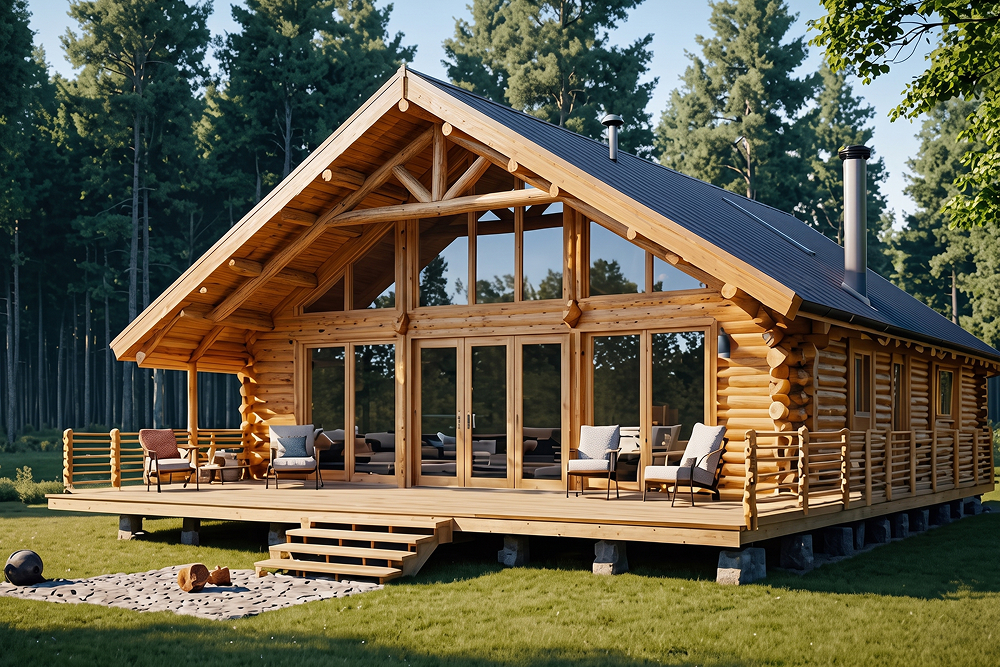
Pine log siding with the tongue and groove, end-matching design is a budget-friendly, highly insulated, and sustainable wood product alternative to full timber walls. It achieves an authentic rustic cabin appearance while allowing for faster construction and easier integration of modern utilities. You should consider its strengths before buying another type of siding.
Pine Log Siding And Its Construction
Pine log siding is a milled wood product attached to conventional exterior and interior wall framing to give a building the rustic, aesthetic look of a traditional log cabin without the high cost of full logs. Its top benefits are cost-effectiveness, superior insulation, ease of installation, design versatility, and sustainability/eco-friendliness.
It is typically crafted by milling logs to have one flat back side and one curved front side. Depending on the profile, it is designed in "D-shapes," such as quarter-logs, half-logs, and premier-D logs to accurately mimic the appearance of a whole log. Most pieces feature tongue-and-groove and end-matched interlocking edges for tight, seamless, and weather-resistant joints.
Cost-Effectiveness Of Pine Log Siding
Real pinewood log siding is more cost-effective than oak, cypress, cedar, or other native or imported woods. Material and labor costs are significantly less expensive because:
- Red pine is a plentiful native tree found in forests and on tree farms.
- Pine log siding is available year-round and is shipped to your building site.
- Manufacturing costs are reasonable because the milling processes are efficient.
- Transportation costs are more affordable compared to full logs.
- Installation costs are reasonable because carpenters need no specialized training.
- The siding is secured to OSB board and wall framing.
- Crane and crane operators are not needed or held to a minimum.
- Homeowners with woodworking knowledge and skills can install log siding.
- High-quality pine log siding is occasionally on sale that provides real value.
Pine Siding’s Superior Insulation
Wood possesses superior insulation properties compared to some manmade materials that resemble log siding. Staining the siding, rather than painting it, allows the wood to breathe naturally. When paired with standard insulated framed walls, pine siding creates a tight, energy-efficient building envelope that cuts down on heating and cooling costs.
Siding’s insulating properties can be enhanced by constructing a home or cabin with 2x6 wall framing instead of 2x4 framing. Fifty percent more insulating materials can be placed in the walls. With adequate floor and attic insulation, the house becomes a highly-efficient structure. Consult with your local insulation expert to determine the best type and amount of insulation for your home’s size and climate.
You Will Like Its Ease Of Installation
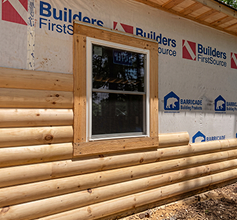
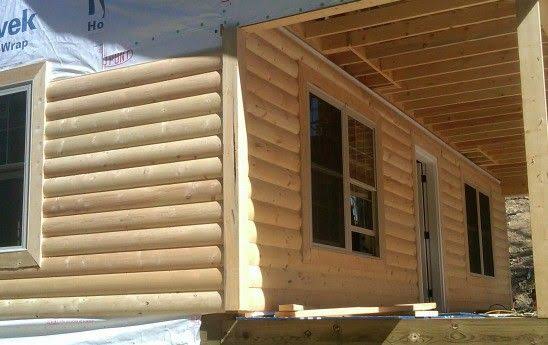
Installing pine log siding is fast, easy, and safe compared to stacking heavy, awkward full logs.
The pine log siding profiles use an interlocking tongue-and-groove, end-matched system.
- The boards lock tightly together, creating an easy-to-install, virtually no-waste product that aligns perfectly.
- Each piece is lightweight enough that one person can install it.
- The corner logs, log trims, and siding are secured with weatherproof oly log screws.
- Much time is saved because there is less measuring and sawing the boards since they can butt together on framing or anywhere between the wall framing.
- The bottom row is leveled, screwed in, and the left-over piece starts the next row.
- Installation is followed by staining/sealing the wood with the color of your choice.
Pine Log Siding’s Design Versatility
Design versatility is another strength you enjoy with pine log siding. It is available in different profiles, such as quarter log, half log, premier D-log, smooth, and hand-hewn surfaces. An assortment of log corner systems and log trim styles allow you to customize the home.
The most common design option is installing siding on the exterior and interior of a house. A second option is installing siding on the exterior and knotty pine paneling on the interior. A third option is using siding on the exterior and a combination of pine paneling and painted drywall on the inside.
Making a room addition is easier for a log siding home than a full-log or timber frame home. A foundation is laid next to the existing house, and the walls and roof are installed on it. The siding can be interlocked in the room corners with a little modification to look like it was part of the original construction.
This Wood Product Is Eco-Friendly
Pine trees are highly renewable resources that are frequently replanted on tree farms, unlike most hardwoods. The milling process creates minimal waste because the center cuts of the logs are used to manufacture trim, paneling, or flooring. Other desirable features include:
- You end up with a virtually “no waste” product that does not end up in landfills.
- Red pine trees grown on tree farms are fast-growing natural resources.
- Because log siding uses a fraction of the wood required for full logs, it requires less energy to manufacture and transport, resulting in a much lower carbon footprint.
- Any left-over pieces can be recycled for other purposes.
Pine’s 5 strengths create a win-win building product you will enjoy for generations. Stain it your desired color to create a standout home or cabin you will love!


