 Store Location
 Track Order



Tips For Building Your Log Home On A Sloped Lot
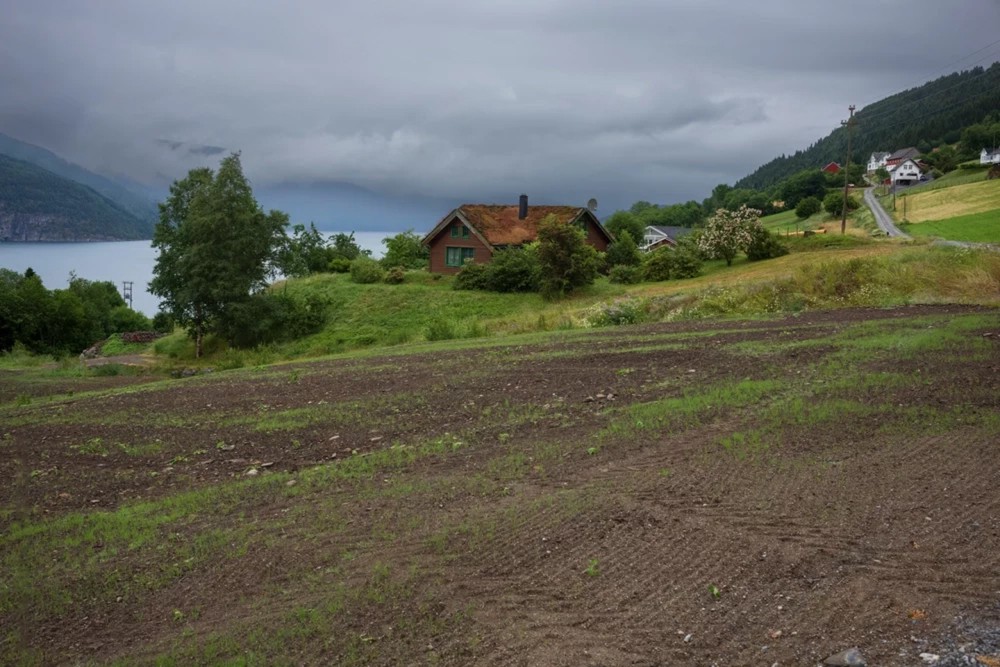
You purchased a sloped lot in a perfect place to build a log home. What’s different compared to building on flat land? Building a log home on a sloped lot requires a specialized approach that prioritizes water management, stable foundations, and blending with the natural terrain.
Key strategies include using crawlspaces or piers to avoid massive excavation, installing robust French drains, and designing for walk-out basements to utilize the slope for extra space. Take the following tips into consideration when building a log home on a sloped lot.
Log Home Foundation And Site Prep
The first things you and your contractor should think about are the foundation and site prep. These steps are crucial for forming the base of your log siding or full log home:
- Opt for Piers or Stilts: On steep slopes, piers allow the cabin to "float" above the ground, minimizing site disruption and providing ventilation. Sloped land may require deeper, specialized, and costlier foundations.
- Use Walk-out Basements: Leverage the slope to create a lower-level walk-out, which is ideal for additional living space, a garage, or storage.
- Reinforce Foundations: Use helical piers, concrete footings, or stem walls to provide a stable, level base that resists settling.
- Limit Excavation: Rather than flattening the site, work with the topography to minimize costs and preserve the natural landscape. Trees, roots, and loose topsoil may be easily removed, while large rocks may require heavy machinery to remove.
Drainage And Water Management
Next, you must prioritize the water drainage and management. Water is the enemy of wood, and you should install quality French drains with filter fabric around the entire perimeter to divert water away from the foundation. Proper grading must be developed to prevent erosion, wall and foundation damage, and basement flooding. This is especially needed for humid and rainy climates.
Elevate log walls by ensuring the first log course is at least 8 to 16 inches above the soil to protect against moisture, splashing rain, and snow damage. Install high-quality gutters and downspouts to manage roof runoff, preventing soil erosion. Protect against erosion by using retaining walls, proper landscaping, and vegetation to secure the soil. Build wider roof overhangs to further direct water away from the walls.
“Building a log home on a sloped lot requires a specialized approach that prioritizes water management, stable foundations, and blending with the natural terrain.”
Log Home Design And Access
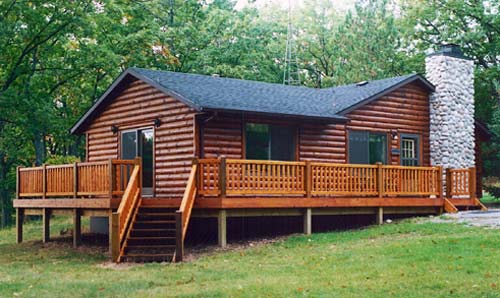 Your log home plans should include a practical design and professional access. They should go beyond just the interior and exterior of the home to the entire lot with these ideas in mind:
- Consider the Driveway: Design a driveway that curves with the natural slope to avoid excessive grading and steep, unsafe inclines.
- Optimize Views: Position the home to maximize views while ensuring it does not silhouette against the skyline.
- Use Retaining Walls: Incorporate terracing or retaining walls to create usable, level outdoor spaces.
- Outdoor Living Spaces: Incorporate walk-out decks or patios that extend over the sloped area for added, functional space.
- Additional Indoor Living Space: Building a basement with an entrance/exit adds more living and storage space, especially for a larger family. If not used for bedrooms and a bath, a den, exercise, TV, or hobby room can add a welcome addition.
Construction And Landscaping Considerations
You and your builder must plan for construction considerations, such as geotechnical advice and building logistics. You will need geotechnical advice to analyze the soil types to minimize risks of erosion or instability and prevent landslides. Plan for logistics by accounting for the difficulty of accessing the site with heavy machinery, such as excavators, bulldozers, dump trucks, or cranes.
Access for heavy equipment can be challenging; plan for a sturdy, temporary, or permanent driveway early in the process. Embrace natural features by incorporating existing rock formations or trees into your design to enhance the aesthetic and reduce excavation. If trees are present on the lot, decide if you want to keep them or remove them. Many contractors will assume you do not want them and cut them down. Consider other existing features such as large rocks, fences, or sheds.
Summing It All Up
The design and structure of a log home may be determined by the slope of your lot, although it may not be apparent when first viewing the land. If you have a predetermined home style in mind, consult with a contractor to determine if it is feasible before purchasing the land.
TIP: Building a log home with pine log siding instead of full logs or timber frames is less expensive and provides the full log look. Construction is faster and easier with all the benefits you seek.


