 Store Location
 Track Order



Best Exterior Log Siding Corners And Trims
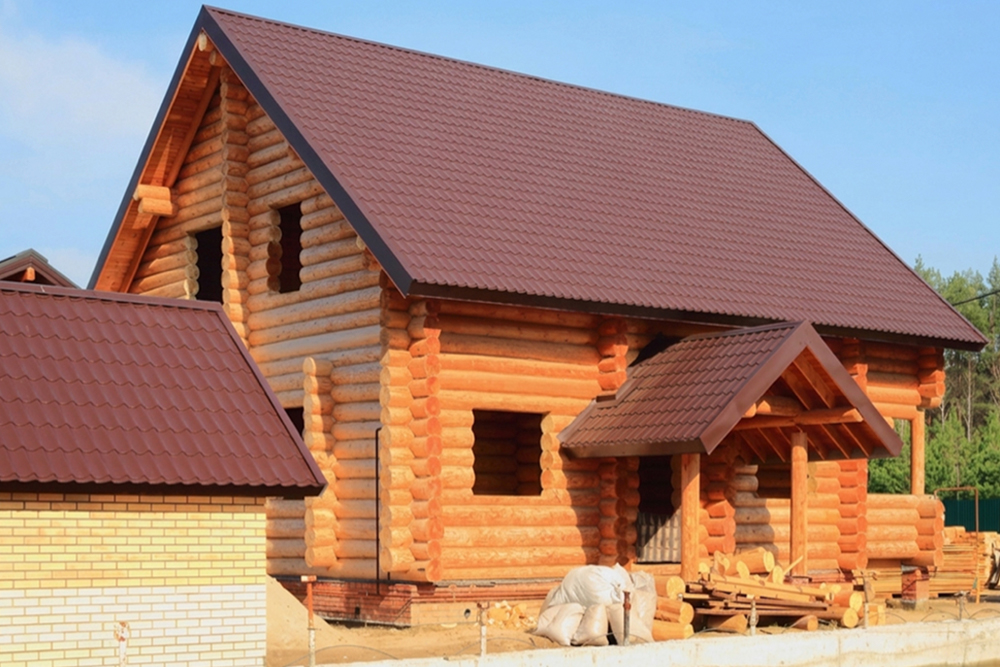
The best exterior and interior log siding trims and exterior corners depend on your siding profile (quarter, half, premier-D, hand-hewn, or full log), their quality, and the rustic aesthetic you want to achieve. Top options include Vertical Corners for budget-friendly ease of installation, Butt-N-Pass Corners for an authentic stacked-log appearance, and Saddle Notch for a full log look. Add complementary and proportional D-Trims around windows and doors to provide a complete appearance.
Top Log Siding Corner Systems
The main thing to remember about the best corners and trims is to buy high-quality products. The best are milled to exacting dimensions for correct fit, kiln-dried for correct moisture content and staining, and hand-inspected for defect-free products. These are the three popular styles:
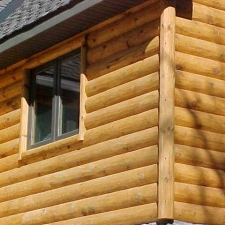
Vertical Log Corner
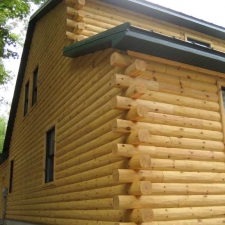
Butt-N-Pass Log Corner
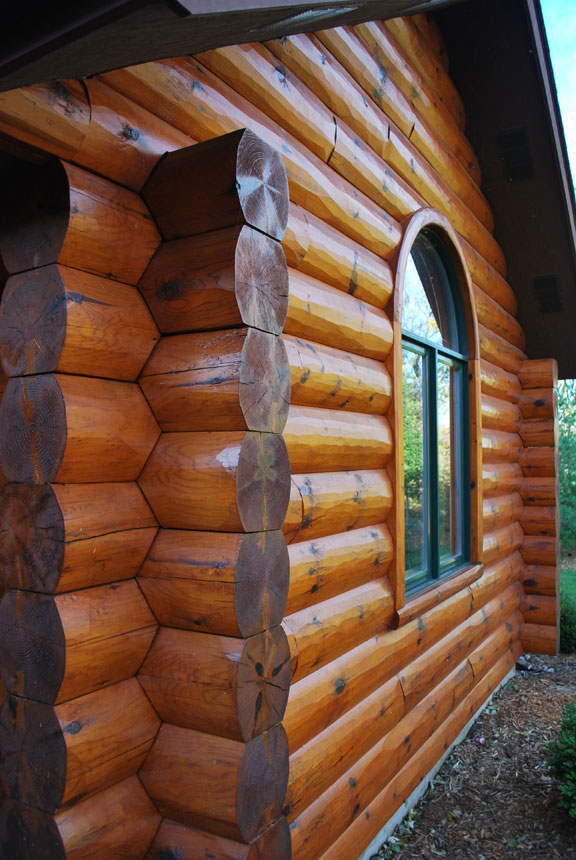
Saddle Notch Log Corner
- Vertical Log Corners: The most economical and beginner-friendly option. These are vertical corner posts (usually 6" or 8" wide) that your siding butts up against. They come in smooth or hand-hewn finishes in 8’, 10’, 12’, and 16’ lengths.
- Butt-N-Pass: These mimic the look of real interlocking, stacked logs. They consist of staggered left and right corner pieces that overlap, providing a highly authentic, traditional cabin look.
- Saddle Notch Corners: This option creates an unmistakable full log look. It is the “cream of the crop” and is available to match all siding profiles
- Caulking: Caulk around all these corner joints and any gaps that might create air leaks.
This video explains how to install trims, corners, and log siding.
Match Trims To Log Siding
Log trims are secured around windows and doors to add a decorative and protective purpose. They should be adequately caulked around to prevent air leaks and moisture from entering the walls. The caulking should be expandable to meet various weather and climate conditions. Your trim size should scale proportionally with your siding profile. Matching them correctly presents a professional appearance, while a mismatch looks awkward.
- Quarter Log Siding: This is the most subtle and affordable profile and pairs best with 2x6 or 3x4 log trims.
- Half Log Siding: The most popular profile that uses larger 3x6 or 4x4 trims.
- Premier-D Siding: The fullest log look that requires heavy-duty 4x6 or 4x6 trims.
- Hand-Hewn Log Siding: Provides the authentic look of manually hewing logs with an adze tool or axe and needs proportional size trims.
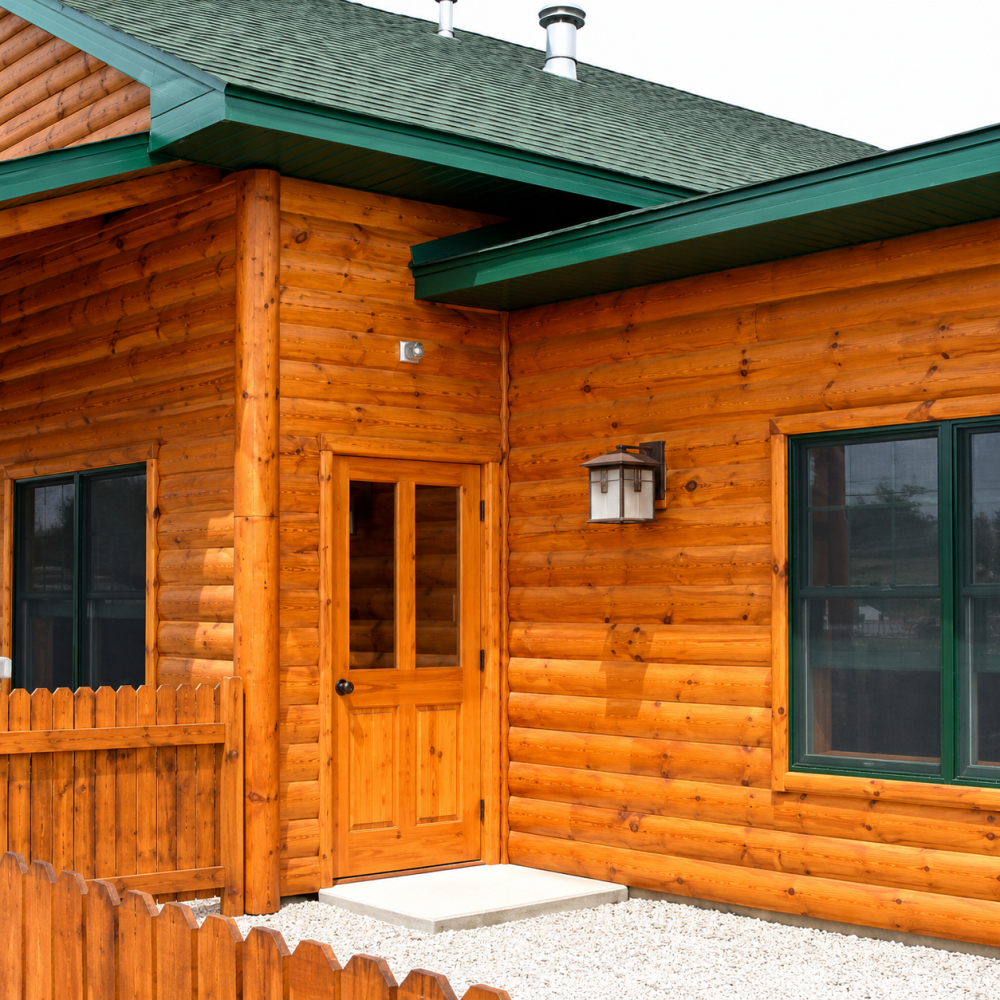
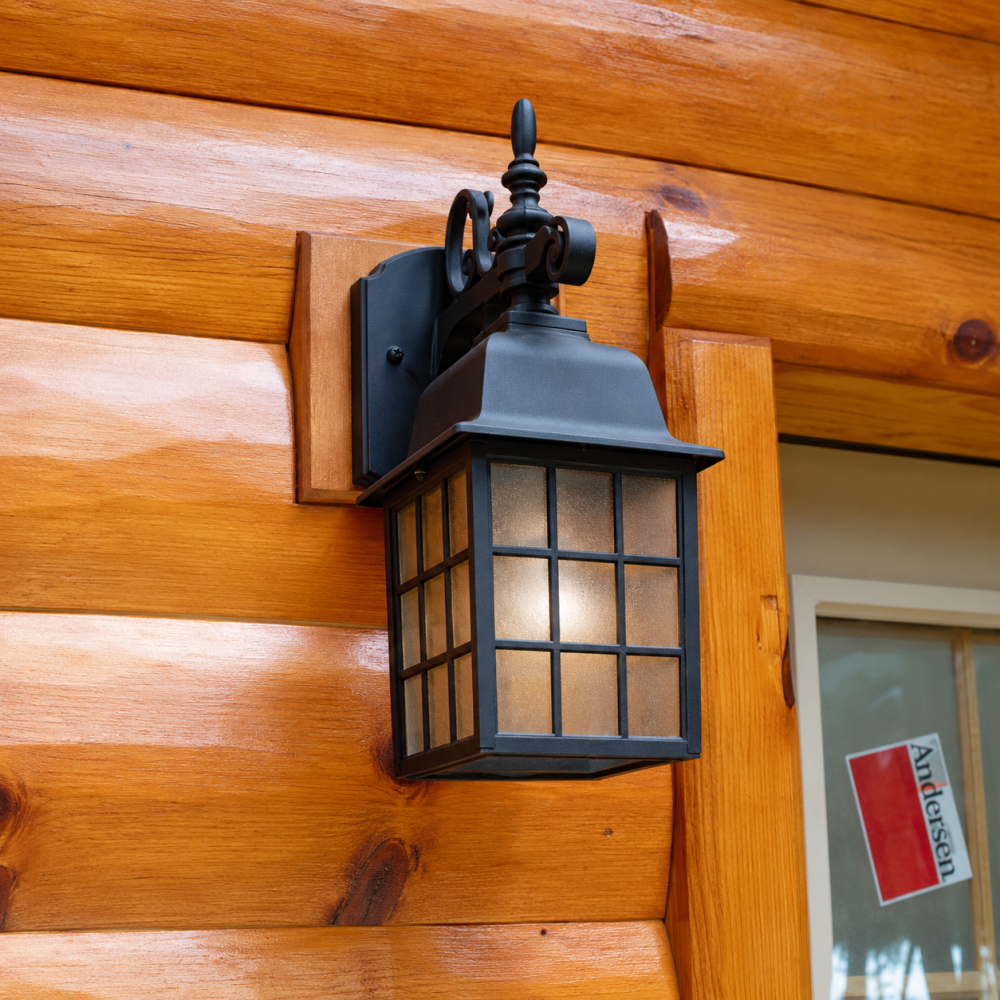
“The best exterior log siding trims and corners depend on your siding profile (quarter, half, premier-D, hand-hewn, or full log) and the rustic aesthetic you want to achieve.”
These trims are cut and installed before the log siding application. Then, once it is installed, you merely butt the siding flush into the trim. Finish off your installation with a thin and consistent bead of caulk.
2×6 and 3×6 pine trim can be used for a more detailed option of having the siding butt into the trim with a chamfered edge. Ask our sales staff about this application. The 2×6 D Trim is also used quite regularly on the interior of the home as casing or baseboard over drywall.
Ask us about creating custom trims that can be made to span a larger width and are used between cathedral windows or doors that may be separated by a small or large space. Arched window or door tops that need pine wood trim are a snap for our woodworking shop or just about any custom situation that you may have.
Essential Drip Edge Trim For Protection
To protect your foundation, you should always install a drip edge trim at the very bottom of your log walls. This is typically a 2x6 board ripped at a 15-degree angle to ensure water sheds completely away from the wall and foundation. It’s essential to keep your log walls as moisture-free as possible.
The bottom course of logs is the most vulnerable part of a log home because it is closest to the ground, rain splashes, and melting snow. Water running down the walls naturally follows the surface tension of the wood. Without a drip edge, this water can curl underneath the bottom log, seep into the foundation, and cause premature rotting. Drip trims have these benefits:
- Prevents Rot: It stops water from wicking back underneath the bottom log and soaking the wood and gasket materials.
- Protects Foundations: It directs runoff away from the concrete or stone foundation, preventing water pooling and seepage into the basement.
- Reduces Maintenance: By keeping the lowest logs dry, you minimize the need to constantly re-caulk or repair degraded wood.
Unfinished And Pre-Finished Options
Use pine log siding, corners, and trim for the most cost-effective log homes and cabins. You can purchase unfinished siding and trims to finish yourself or hire a painter. Our professionals can apply your choice of an exterior or interior stain product to your log siding and trims. Order online with confidence from the Log Home Shoppe.


