 Store Location
 Track Order



Is Your Log Siding Cabin Safely Wired?
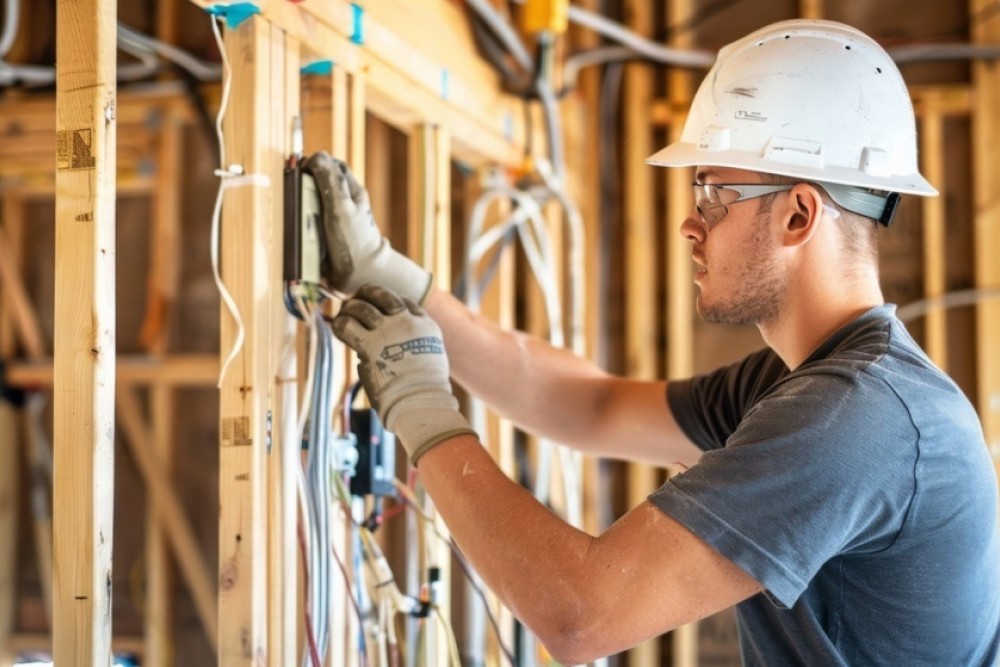
Safely wiring a log siding cabin requires careful planning, adherence to the National Electrical Code (NEC), and local building codes, and often involves specific installation methods due to the log siding wall construction. For safety and compliance, this work should ideally be done by a licensed electrician.
Why Your Log Siding Cabin Must Be Safely Wired
A log cabin must be safely wired to protect the structure and its occupants. The key reasons for safe wiring in your home include:
- Flammability of Wood: Wood is a combustible material, making any electrical fault a serious fire hazard.
- Risk of Fire & Shock: Incorrect or old wiring, such as knob-and-tube, can leave live wires exposed, increasing the chance of sparks igniting the wood, while faulty systems lack modern protection against shock.
- Building Code Compliance: Local codes mandate safe electrical systems for habitation, requiring grounding, GFCI outlets near water, and sometimes AFCI protection, often necessitating licensed electricians.
- Log Movement & Settling: Full logs settle and shift over time, which can stress wires, so wiring methods must accommodate this movement to prevent damage and exposure. This issue is avoided by building with wood log siding.
Key Wiring Safety And Planning Considerations
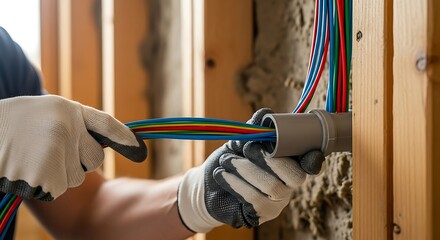 A licensed electrician should design the wiring plan and perform the installation to ensure all work meets safety standards and local codes, especially since log construction presents unique challenges. Planning and decisions about outlet, switch, and lighting locations must be made during the initial design phase or before construction begins. Wiring methods that are easy in framed houses with log siding are difficult or impossible after full logs are stacked.
Ensure all necessary permits are acquired. The work must be inspected by a local code official at the rough-in stage and upon completion. Use the correct wiring and electrical boxes that are rated for the intended use and compliant with codes. For example, use weatherproof boxes for exterior outlets and ensure proper grounding is established.
Essential safety practices include a proper grounding system that is installed to protect against electrical faults. All circuits must be protected by appropriate circuit breakers in the main service panel to prevent overloads and short circuits. Never overfill electrical boxes with wires, as this can create a fire hazard and violate codes. Ensure all outlets in areas such as kitchens, bathrooms, and outdoor locations have Ground Fault Circuit Interrupter (GFCI) protection. All connections should be thoroughly tested before power is turned on.
“Safely wiring a log siding cabin requires careful planning, adherence to the National Electrical Code (NEC), and local building codes. For safety and compliance, this work should ideally be done by a licensed electrician.”
Common Wiring Methods For Log Cabins
Wiring methods for log siding cabins differ from those of full log cabins. Since wood log siding is attached to conventional wall framing, the work is much faster and easier than wiring a full log cabin. Homes are electrically wired with power entering from the utility company, going to a main breaker panel, and then branching out via circuits (hot, neutral, ground wires) to outlets, switches, and fixtures. 120V is used for standard devices and 240V for heavy appliances, all grounded for safety.
This system uses hot wires to deliver power, neutral wires to complete the circuit, and ground wires for fault protection, creating safe, distinct paths for electricity. Electricians approach wiring a wood log siding cabin essentially the same as one with interior drywall on the framing. Here are the key wiring components and how they work:
- Service Entrance: The point where power from utility lines enters your home.
- Main Electrical Panel (Breaker Box): The central hub where power is distributed to different circuits, protected by breakers or fuses.
- Hot Wires: Carry 120V or 240V power to devices.
- Neutral Wires: Provide the return path for the electrical current.
- Ground Wires: A crucial safety wire connecting to the earth to divert excess electricity in case of a fault, preventing shocks.
- Circuits: Pathways from the panel to outlets, lights, and appliances, protected by individual breakers.
Voltages And Safety Features For A Log Siding Cabin
Cabins need 120-volt circuits to power most standard outlets, lights, and smaller appliances, using one hot wire and one neutral wire. 240-volt circuits are necessary for large appliances (stoves, dryers, central A/C) and use two out-of-phase hot wires for more power.
Grounding consists of a third wire that connects to the earth, diverting fault current away from people. Circuit breakers automatically shut off power to a circuit if it overloads or shorts, preventing fires. Ground-Fault Circuit Interrupters (GFCIs) and Arc-Fault Circuit Interrupters (AFCIs) are specialized breakers that provide extra protection in wet areas or against dangerous electrical arcing.
The Cabin Wiring Process
Electricians use a standard and simplified process for wiring log siding cabins. It is essentially the same process used in conventional homes with brick, stone, vinyl, or metal siding.
- Rough-In: Wires are run through walls, floors, and ceilings before log siding is installed.
- Panel & Boxes: The main panel is installed, and boxes for outlets/switches are placed.
- Connections: Wires are connected to devices (outlets, switches) and breakers in the panel.
- Inspection: A licensed inspector checks the work before the walls are closed up and again after finishing.
- Exposed Conduit/Retro Wiring: For existing cabins or a rustic/industrial aesthetic, PVC or metal conduit can be surface-mounted and painted to match the wood siding.
Your log siding cabin must be safely wired to protect it and its occupants. We hope these recommendations help you understand wiring installation and safety.


