 Store Location
 Track Order



How To Prevent Water Leaks In Your Log Siding Home

Any home is subject to water leaks when it is not properly maintained. It’s no different with pine or cedar log siding homes. To prevent water leaks in a log home, maintain exterior finishes like stains and sealants, keep joints between logs caulked where needed, and ensure proper drainage by using long roof overhangs and clean gutters. Additionally, maintain the roof, check for and repair any damage to flashing or roofing material, and ensure proper grading around the foundation.
Exterior Maintenance And Finishes
Log siding home water leaks can be prevented by applying regular exterior maintenance and finishes. These steps will do much of the job quite well:
- Apply high-quality protective finishes: Regularly apply high-quality, breathable, and weather-resistant sealants or stains to the exterior logs, paying special attention to the end grain. Semi-transparent stains are recommended because they allow for visual inspection of moisture issues.
- Maintain log ends: Seal the end grain of the logs with a protective finish, as this is where moisture can easily penetrate.
- Caulk and chink gaps: Use high-quality, flexible polyurethane caulk or chinking specifically designed for log homes to fill gaps between logs where needed, around windows, and doors. Avoid house caulk or silicone.
- Address cracks: Fill any larger cracks with a backing rod and a flexible caulk, and use a sprayer to apply stain into upward-facing checks to seal them from moisture.
Structural And Site Draining Solutions For Log Home Water Leaks
Applying structural and site drainage solutions is another approach to preventing water leaks. Ensure proper roof overhangs are large enough to help direct water away from pine and cedar log siding walls. Maintain gutters and downspouts by keeping them clean and free of debris to prevent clogs and ensure water is directed away from the foundation. Consider installing high-quality gutter guards.
Improve your yard grading by ensuring the ground slopes away from the foundation to prevent water from pooling near the base of the home. A gravel barrier can also be installed at the base to reduce flashback. Make sure the flashing around windows, doors, roofing, and where decks meet the house is intact and properly sealed. The bottom logs should be at least two feet above the ground to prevent water from splashing up from the soil.
“Any home is subject to water leaks when it is not properly maintained.”
Regular Inspections And Other Considerations
The old adage, “An ounce of prevention is worth a pound of cure,” still holds true when it comes to home water leak prevention. Follow these additional steps and reap the benefits:
- Perform annual inspections: Conduct annual inspections, checking lower logs and areas prone to getting wet, and look for any signs of wear or damage to finishes, roofing, flashing, and caulking. Learn about common water leak causes and issues.
- Check around doors and windows: Examine the log trims around doors and windows and caulking around corner logs.
- Maintain landscaping: Keep bushes and other plants about 5-6 feet away from the log walls to allow for better airflow and reduce moisture buildup.
What To Do If You Experience Water Damage: First Steps
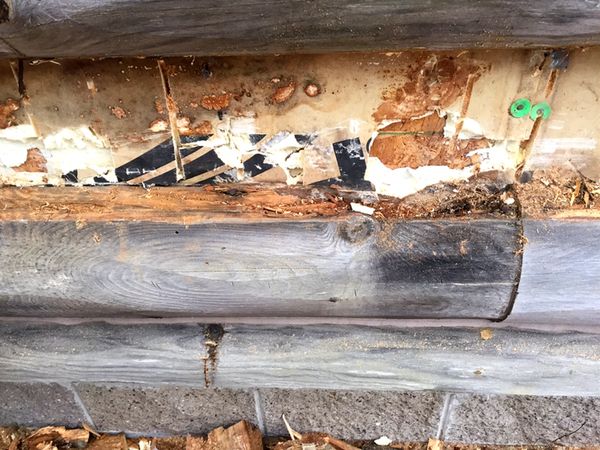 Occasionally, log home water leaks can cause damage ranging from minor issues to severe rot or mold damage. If your log home has damage, take the following actions, such as:
Immediate actions
- Safety first: Turn off the electricity to the affected area immediately to prevent electrical shock.
- Protect the area: Cover any openings where water is entering with a tarp or heavy-duty plastic secured with wood cleats.
- Document everything: Take photos and videos of all damage before you start cleaning or moving anything. This is crucial for your insurance claim.
- Notify your insurance company: Contact your homeowner’s insurance company promptly to report the damage, even if you aren't sure of the full extent.
Drying and cleaning
- Remove standing water: Get rid of any standing water as quickly as possible.
- Dry out the structure: Use fans and dehumidifiers to thoroughly dry out the affected area. This is critical for preventing mold.
- Remove damaged materials: Remove any wet or damaged drywall, insulation, and trim that cannot be salvaged.
- Treat for mold and rot: If you see signs of mold, or if the wood was exposed to water for a long period, you may need to treat it with products containing borates or other wood brighteners, but always follow the product instructions.
Repairing Log Home Water Leaks
Repairing the damage
- Address the source: Find and fix the original source of the leak to prevent future damage. This may involve repairing chinking or sealing gaps in the log siding walls.
- Repair or replace logs: Depending on the severity, you may need to repair damaged siding or replace them entirely. This is often a job for a log home professional.
- Restore the wood: After the wood is dry, you can sand and refinish it to restore its appearance. You may need to use a wood brightener to remove water stains.
When to call a professional
- Structural damage: If there is any sign of structural damage, rot, or foundation issues, call a professional immediately.
- Extensive damage: For large-scale water damage, it's best to hire a professional restoration company.
- Hidden moisture: If you suspect hidden moisture behind walls or in your log siding walls, a professional can use thermal imaging to pinpoint the problem.
Water leaks can cause short-term and long-term damage to a log siding home. If you detect any water leaks or damage, correct it as soon as possible to prevent further issues. Review this article about more water damage prevention ideas.


